Archive
A 60-minute discussion, focused on the intersection between climate change, environmentalism, and health commodity supply chains.

Strategies were designed to obtain import licenses for medical devices and medicines, in order to strengthen access and reduce costs for vulnerable populations to obtain effective and safe contraceptives. Bearing in mind that...
- PPT_Institucional_Actualizado.pdf (2.43 MB)
The injectable contraceptive market in sub-Saharan Africa (SSA) is dominated by imports from only a few manufacturers. Such market concentration makes the supply of modern contraceptives to SSA potentially vulnerable to...
The value of the public-sector contraceptive market contracted by eight percent in 2021 relative to 2020, due to the COVID-19 pandemic impact and funding challenges, according to a new report released by The Clinton Health Access...
Join us for a captivating panel discussion on the important role of the private sector in developing, manufacturing, and delivering self-care products. While most of the attention, focus, and policy efforts have been on public...
Second webinar of a series with the aim of identifying country challenges, potential solutions, and best practices in training, communication, and supportive supervision in support appropriate use of uterotonics (current and new)....
Supply chain managers deal with normal constraints and delays as part of their daily activities. But how do they react when an event beyond their control impacts not only their local logistics environment but an entire region or...
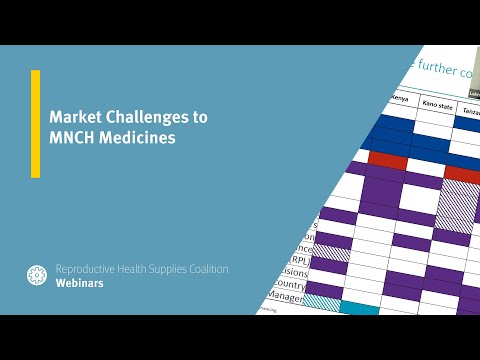
R4D presented on a project they have developed that focuses on co-creating a list of context-specific, prioritized solutions to address market challenges that limit access to MNCH medicines at the global level and in each of the...